Should I Trust an In-House CBD Lab Report or Only Independent Labs?
A CBD product’s certificate of analysis (COA) can help you check what is in the bottle—but the report is only useful if it is clear, tied to the product you are buying, and produced through credible testing. That raises a common question: should you trust an in-house CBD lab report, or insist on independent testing?
The short answer: an in-house report can provide useful information, but it is not the same thing as independent CBD testing. A report from an outside laboratory generally offers a stronger degree of separation between the seller and the test results. Still, the word “third-party” alone does not guarantee quality. You should also check the lab, the batch or lot number, the product details, and the actual cannabinoid results.
This guide explains how to compare reports, understand serving sizes and CBD amounts, spot misleading oil labels, and distinguish full-spectrum, broad-spectrum, and isolate products.
What Is the Difference Between In-House and Independent CBD Testing?
An in-house lab report is created by a company’s own laboratory or testing team. The company may have trained staff and suitable equipment, and its testing may be useful for quality control during production. But the company also has a commercial interest in selling the product. That does not automatically make the results false; it does mean shoppers should consider the potential conflict of interest.
Independent CBD testing is performed by a laboratory that is separate from the product manufacturer or seller. The manufacturer typically sends a sample to the lab, which tests it and issues a report. Because the lab is not the brand’s own testing department, the arrangement can offer more distance from the seller’s commercial incentives.
In practice, a credible company may use both approaches: in-house checks to monitor production and outside testing to verify finished batches. If a brand relies only on its own results, ask whether it can provide a recent report from an outside lab. If it provides a third-party COA, check that the report identifies the testing lab and the product batch—not just the brand name.
How to Evaluate a CBD Lab Report
A COA should be more than a graphic with a “passed” stamp. Open the full report and look for specific information. Depending on the product and the tests performed, a report may include cannabinoid levels and screens for contaminants such as pesticides, heavy metals, residual solvents, or microbial impurities. Not every report includes every test, so check what was actually analyzed rather than assuming a single certificate covers everything.
Check the laboratory’s credentials
Look for the lab’s name, contact details, report number, and the methods or test categories used. An ISO accredited lab often means the lab has been assessed against a relevant international standard for competence and quality systems. For analytical testing, consumers may see accreditation to ISO/IEC 17025. Accreditation applies to a defined scope of testing, however, so it is reasonable to check whether the lab’s scope covers the analysis in the report.

Be precise about the terminology: a lab may be accredited to a standard; saying a product is “ISO certified” can be vague or misleading. Accreditation is not a guarantee that every result is perfect, but it is a useful quality signal when combined with a clear, product-specific report.
Match the report to the bottle
The batch or lot number on the product should match the number on the COA. This batch/lot number matching system matters because a report for one production run does not prove what is in another. If the package has one number and the report has another—or no batch number at all—ask the seller for the correct document before relying on it.
A QR code on packaging linking to lab report document can make this check easier. Scan it, then confirm that it opens the actual report for your product and batch. A QR code that leads to a general homepage, a product page, or a list of unrelated certificates is less helpful. You can also look for the report date and product name, and verify that the document is readable rather than a cropped image that hides key details.
- Find the product’s batch or lot number on the label.
- Scan the QR code or visit the brand’s COA page.
- Open the full lab report, not just a summary graphic.
- Match the batch number, product type, and report date.
- Check that CBD is reported separately from other cannabinoids.
- Review the tests shown and note any categories that are missing.
CBD Milligrams: Per Bottle Is Not Per Serving
One of the most common label mix-ups is confusing the CBD amount in the entire bottle with the amount in one serving. A product may advertise “1,000 mg CBD,” but that usually refers to the total in the bottle, not each dropperful. The serving size and serving count matter.
For example, a 1,000 milligram tincture in a one ounce bottle is roughly 30 servings, about 33 milligrams per serving. That estimate assumes the bottle contains about 30 measured servings; the exact amount depends on the product’s serving instructions and dropper markings. A label should make it possible to understand both the total CBD in the bottle and the amount per serving.
Label information What it tells you What to check Total CBD per bottle The approximate CBD amount in the full container Whether the COA’s results broadly support the label claim CBD per serving The amount in the stated serving size How many milliliters or droppers make up one serving Total cannabinoids The combined amount of multiple measured cannabinoids Whether the report also lists CBD individuallyTo compare products fairly, calculate the price per milligram of CBD, not just the price per bottle. Divide the product price by the total CBD milligrams stated on the label. Then confirm that the product actually discloses CBD—not merely a combined cannabinoid total. A low price per milligram is not proof of quality, but the calculation can expose a weak value proposition or a confusing label.
“Total Cannabinoids” Is Not the Same as CBD
Some labels emphasize “total cannabinoids” without stating how much CBD the product contains. That figure may include CBD plus other cannabinoids, such as CBG or CBC, depending on the formula and the way the total is calculated. It does not tell you the individual CBD amount by itself.
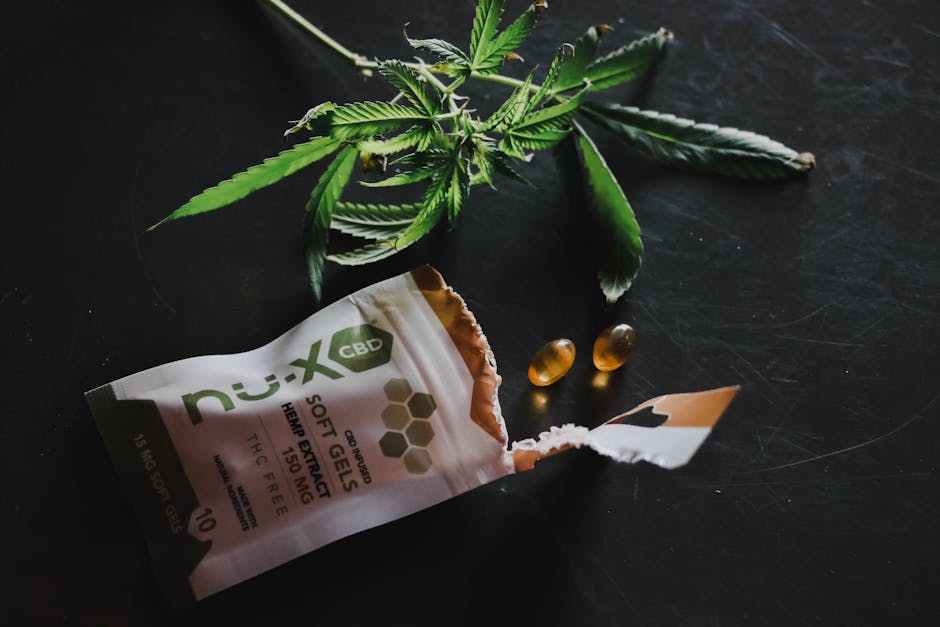
Look for a COA that lists cannabinoids separately, usually in a table. The report may use abbreviations such as CBD, CBDA, THC, or CBG. If the label promises a specific CBD amount but the report only gives “total cannabinoids,” ask for a more detailed certificate. A QR code should take you to a document that answers the question, not leave you guessing.
Make Sure the Product Is Actually a CBD Product
Hemp seed oil and CBD oil are not interchangeable terms. Hemp seed https://www.thedailynewsonline.com/sponsored/how-to-read-a-cbd-label-without-getting-fooled/article_f6fd319b-cc89-4798-9957-bf218c7f9e1c.html oil is made from hemp seeds and is commonly sold as a food or cosmetic oil. CBD is a cannabinoid associated with hemp’s flowers and other above-ground parts. A product marketed with hemp imagery may contain hemp seed oil without containing meaningful CBD.
This is where hemp seed oil bait-and-switch concerns arise: a package may use “hemp” prominently while offering little clarity about CBD content. Read the ingredient list and look for an explicit CBD amount, such as milligrams per bottle and per serving. If the label says “hemp oil” or “hemp seed oil” but does not identify CBD or provide a cannabinoid profile, do not assume it contains CBD.
Also be wary of broad claims such as “hemp extract” without a stated CBD quantity. The COA should identify the tested material and show CBD results consistent with the product’s label. If the company cannot explain the difference between its hemp seed oil and cannabinoid extract, that is a reason to pause.
Full Spectrum, Broad Spectrum, and Isolate
These terms describe the kinds of hemp-derived compounds intended to be in a product. They are not interchangeable, and the COA can help you check whether the description aligns with the measured cannabinoid profile.
- Full spectrum: Intended to contain CBD along with other hemp compounds, potentially including trace THC. Check the report for the cannabinoid profile and the product’s THC information.
- Broad spectrum: Intended to include CBD and other cannabinoids while having THC removed or reduced to a level described by the manufacturer. Do not assume “broad spectrum” means the same thing as “zero THC”; review the lab results and the brand’s wording.
- CBD isolate: Intended to contain CBD as the primary cannabinoid, with other cannabinoids reduced or absent. The COA should show the CBD result and indicate what else was tested.
These labels describe a product’s intended composition, not a guarantee of purity or effectiveness. A full-spectrum product still needs clear testing, and an isolate product still needs a batch-specific report. If avoiding THC is important to you, examine the actual report and consult an appropriate professional about your circumstances rather than relying on a front-label phrase alone.
What About Brand Reports and Product Pages?
When evaluating any brand, including Joy Organics, focus on the specific product and batch you are considering rather than assuming that a company-wide reputation answers every testing question. Look for a COA you can access, check its lot number against the package, and see whether it lists CBD separately. A familiar name is not a substitute for a matching report.
Consumer coverage can help introduce the questions to ask, but articles and audio summaries are not a replacement for the underlying lab document. For example, a reader may encounter CBD coverage on The Daily News (thedailynewsonline.com), or hear a version delivered through Trinity Audio. Treat those as ways to access information, not as proof that a particular batch was tested. When it comes to product contents, go back to the batch-specific COA.
Red Flags to Watch For
- A QR code that opens only a homepage, with no direct route to the report.
- A COA with no batch or lot number—or a number that does not match the package.
- A label that states “total cannabinoids” but does not disclose the CBD amount.
- A “hemp oil” product that does not clearly list CBD or provide cannabinoid results.
- A lab report that shows only a “pass” graphic without underlying measurements.
- Medical promises on packaging, such as claims to treat or cure a disease.
- A report that is old, incomplete, difficult to read, or for a different product format.
Also be cautious of absolute statements such as “lab tested” when the seller does not identify who performed the test or what was tested. Testing is a process, not a magic phrase. Ask for the document and inspect it.
So, Should You Trust an In-House CBD Lab Report?
An in-house report can be a useful piece of information, especially when a company explains its process and provides detailed results. But if you are deciding between an in-house report and a credible, batch-specific report from an independent laboratory, the independent report generally offers more assurance because the testing is separate from the seller.
For the strongest practical check, look for both transparency and traceability: a named lab, relevant accreditation, a readable COA, an individual CBD result, and a batch or lot number that matches the bottle. Confirm the serving size, distinguish per-serving from per-bottle milligrams, and make sure “hemp oil” is not being used in place of an actual CBD disclosure.
No report can tell you everything about how a product will work for you, and a COA is not medical advice. But a clear, independently tested, batch-matched document makes it easier to know what you are buying—and much harder for vague marketing language to do the talking.